What we do
Our services
Rescue is where it starts. Rehabilitation, research, outreach and enforcement keep animals and people safe afterwards.
Eight areas of work
-
Rescue
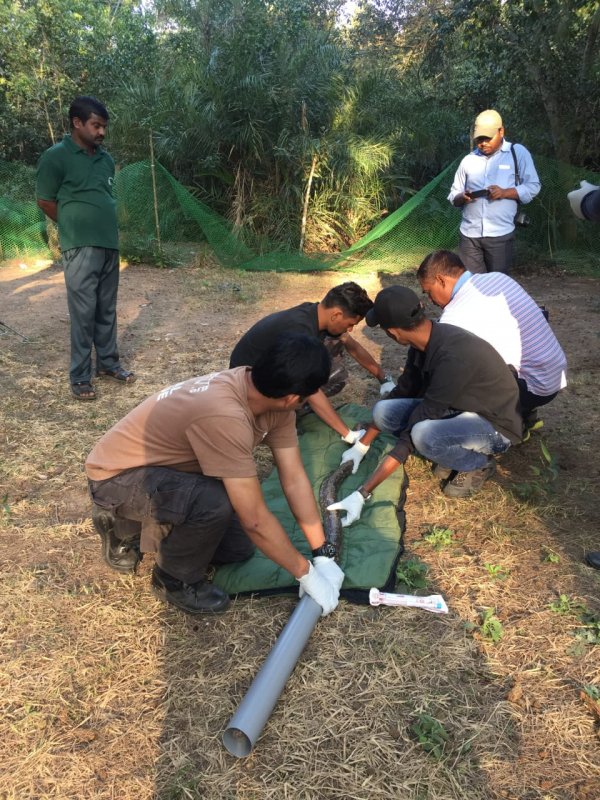
Trained rescuers safely capture injured, orphaned, displaced and endangered animals.
We specialize in rescuing wild animals through the safe capture, care, and rehabilitation of those that are injured, orphaned, displaced, or endangered. These operations are carried out by our team of trained rescuers. Animals often require intervention due to threats such as habitat loss, human-wildlife conflict, poaching, and natural calamities.
-
Scientific Research
Studying behaviour, habitats and populations to understand and protect local wildlife.
We are involved in Scientific research on wildlife which plays a critical role in understanding and conserving biodiversity. It involves the systematic study of animal behavior, genetics, physiology, habitats, population dynamics, and ecological interactions.
-
Rehabilitation
Treating injured and sick animals until they can return to the wild.
Wildlife rehabilitation is the process of treating, caring for, and ultimately releasing injured, sick, or orphaned wild animals back into their natural habitats. Its primary aim is to restore animals to full health and independence without domesticating them. The process typically involves rescue, medical treatment, recovery in specialized enclosures, and careful release into suitable environments.
-
Community Outreach
Talks, drives and training that help people live safely alongside wildlife.
Community outreach in wildlife conservation is a critical strategy aimed at educating, engaging, and empowering local communities to participate actively in the protection and preservation of wildlife and their habitats. This outreach involves spreading awareness about the importance of biodiversity, the threats faced by various species, and the role people play in wildlife conservation. Outreach efforts often focus on promoting coexistence between humans and wildlife, especially in areas where human-wildlife conflict is common.
-
Wildlife Disaster Rescue
Saving wild animals caught in floods, fires and storms.
During events such as floods, wildfires, earthquakes, and storms, we focus on saving wild animals affected. These disasters can destroy habitats, injure animals, and separate them from their groups or food sources. Rescue efforts involve locating and safely capturing distressed wildlife, providing emergency medical care, and relocating them to safer environments or our rehabilitation centre.
-
Human Animal Conflict Management
Planned operations when monkeys, leopards and other animals enter towns.
Technical rescue programs are carefully coordinated efforts aimed at managing situations where wild animals—such as monkeys or leopards—enter urban or semi-urban areas. These encounters are often the result of habitat loss, limited food sources, or displacement, leading to potential conflicts with humans. Each rescue operation involves detailed planning, effective crowd management, and close coordination with local authorities to ensure safety. The goal is to safely capture the animal, provide necessary medical care, and relocate it to an appropriate natural habitat. These programs also play an important role in educating the public and promoting strategies for peaceful coexistence with wildlife.
-
Mission Zero Bite
Preventing snakebites and attacks through awareness and safe practices.
Mission Zero Bite is an initiative focused on preventing human-wildlife conflict, particularly incidents involving bites or attacks by wild animals. This emphasizes safety for both humans and animals by promoting coexistence, responsible behavior, and conflict mitigation strategies. It aligns with the vision of peaceful human-wildlife coexistence, ensuring safety without compromising the survival of wild species.
-
Wildlife Conservation Enforcement
Working with the Forest Department against poaching and illegal wildlife trade.
Wildlife conservation enforcement plays a crucial role in combating this trade through anti-poaching patrols, intelligence gathering, stricter border controls, and prosecution of offenders. Species like elephants, rhinos, tigers, and pangolins are among the most heavily targeted, often despite being protected under international laws and agreements. In co-ordination with the forest department we aim to mitigate illegal wildlife trade.
24×7 Wildlife Rescue Helpline
Need a rescue right now?
Our helpline is answered 24 hours a day, every day of the year.